Back in 1994, whilst living in Mexico, I got to visit Celestun, near Merida on the Yucatan Peninsula, to see the famous American flamingos that breed there. Here, more than two decades later, Merida-based birding guide Joel Ortega from Birding Mexico Expeditions shares the story of these fascinating pink birds. (CJ)
Why are flamingos pink? And why are those from Yucatán the most colourful in the world?
Have you ever looked up at the sky and wished you could be a bird? And if you have, let’s dive deeper into that feeling by asking ourselves, what kind of bird would you like to be? Perhaps an albatross with its massive wings? Perhaps a beautiful and hardworking hummingbird? Or maybe birds with a great sense of companionship, like crows?
For me, flamingos have all of these qualities: I think it would be so much fun to be part of their enormous flocks.
Flamingos as Icons
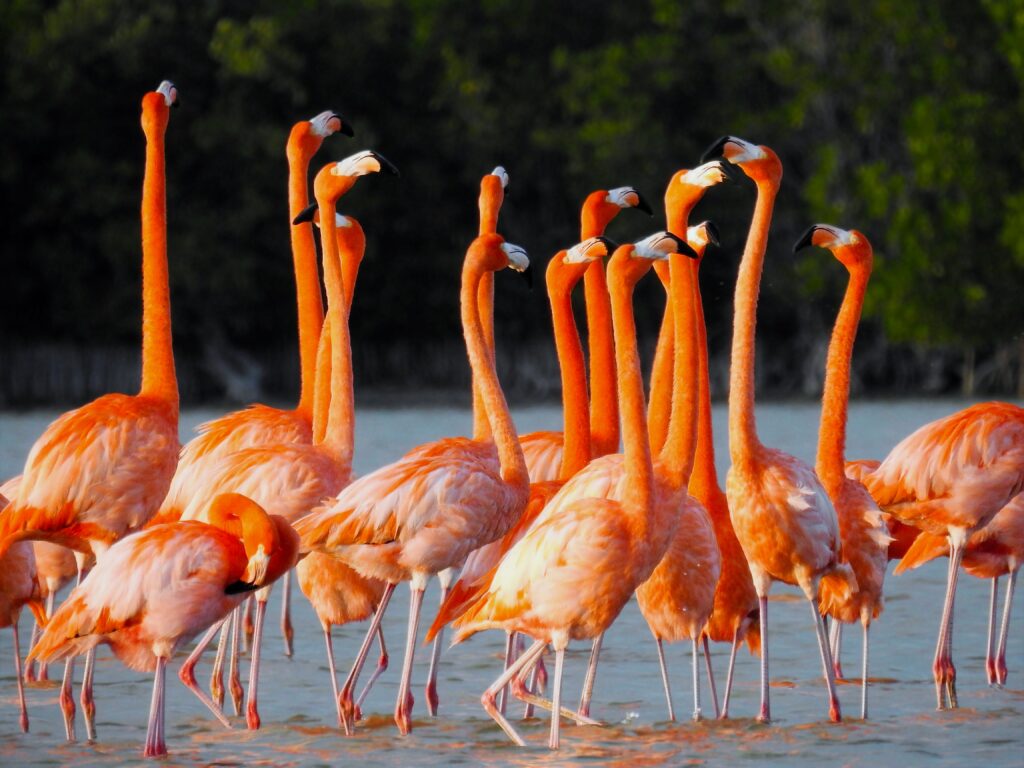
Flamingos need no introduction: their pink plumage, remarkably long neck and legs, and distinctively curved beak combine to give them an appearance that is both elegant and, let’s be honest, a little clumsy.
The name of their taxonomic family Phoenicopteridae comes from the word “phoenix”. It was named after the striking color of their wings, which can resemble flames, highlighting their captivating beauty.
Currently, there are six species of flamingos worldwide, all of which are highly gregarious and live in large groups to improve feeding opportunities, increase protection, and care for their young. Flamingos are so highly gregarious that you will rarely find one alone, except in unusual circumstances, such as when an individual is sick or dying. Even when foraging, they are typically seen in small groups or pairs.
Flamingos have inspired numerous authors and poets. Pablo Neruda, Nobel Prize in Literature, describes them in his poem “Flamencos” as
“A pink angel that brought slow flight.
It was her body made of feathers, her wings were made of petals, she was a rose that flew.”
As a Mexican ornithologist, I have been fortunate to live in one of the best spots to see flamingos. In particular, the Yucatan Peninsula has the privilege of being the main, and almost the only, except for a few islands, nesting site for the American flamingo (Phoenicopterus ruber). This has become a major tourist attraction, reflected in the region’s coastal popular culture: beautiful flamingo murals, statues, postcards, and stuffed animals fill souvenir shops everywhere. It is, without a doubt, a beloved local icon that paints the beaches pink. But have you ever wondered where that characteristic pink tone comes from?
The Science Behind Their Colour
Flamingos, when they are chicks, have a dull greyish-white colour. It is through their diet that they acquire pink pigmentation, which is attenuated over the years.
Specifically, their colors come from chemical compounds called carotenoids: Pigments produced by plants, bacteria, fungi, and small animals such as insects and crustaceans. In flamingos, depending on the species, it can come from algae or small crustaceans and gastropods that they consume. For example, one of the favourite foods of the American flamingo is the brine shrimp (Artemia salina), a small crustacean that, in turn, feeds on algae rich in carotenoids.
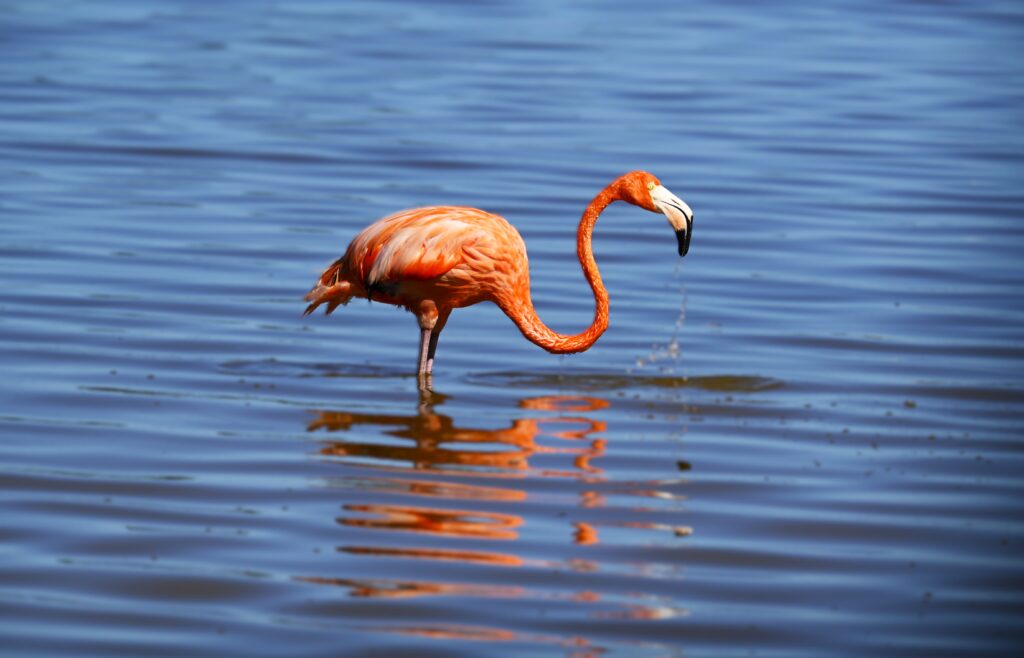
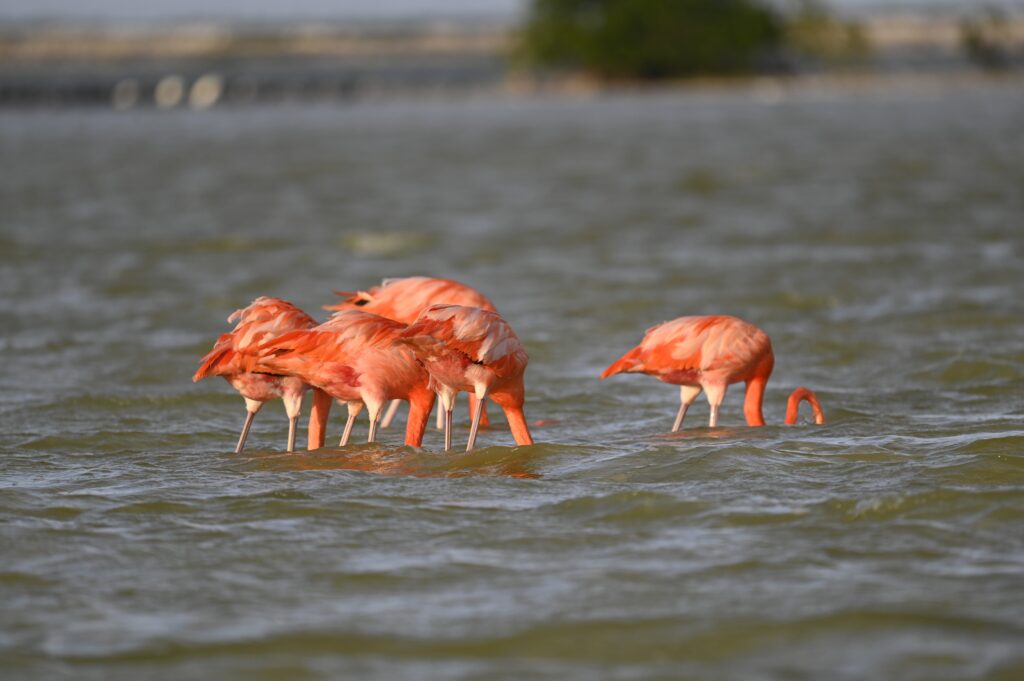
By the way, watching flamingos feed is something truly worth seeing. They feed in shallow waters, where you can observe them with their beaks semi-submerged or totally submerged, looking for food to filter, sometimes they also hit the sediment to move it and make more crustaceans or buried algae come out.
This vibrant coloration, acquired through their diet, serves important functions. The first reason is to be selected as a potential partner. It has even been seen that flamingos have the habit of grooming themselves to spread the pigments that are produced by uropygial secretions on their feathers and, thus, enhance their colour. Flamingos challenge the common pattern in the animal kingdom, where males are typically more colorful. They are possibly the only monogamous animal species known to exhibit reverse sexual dimorphism in coloration, with females being more colorful than males.
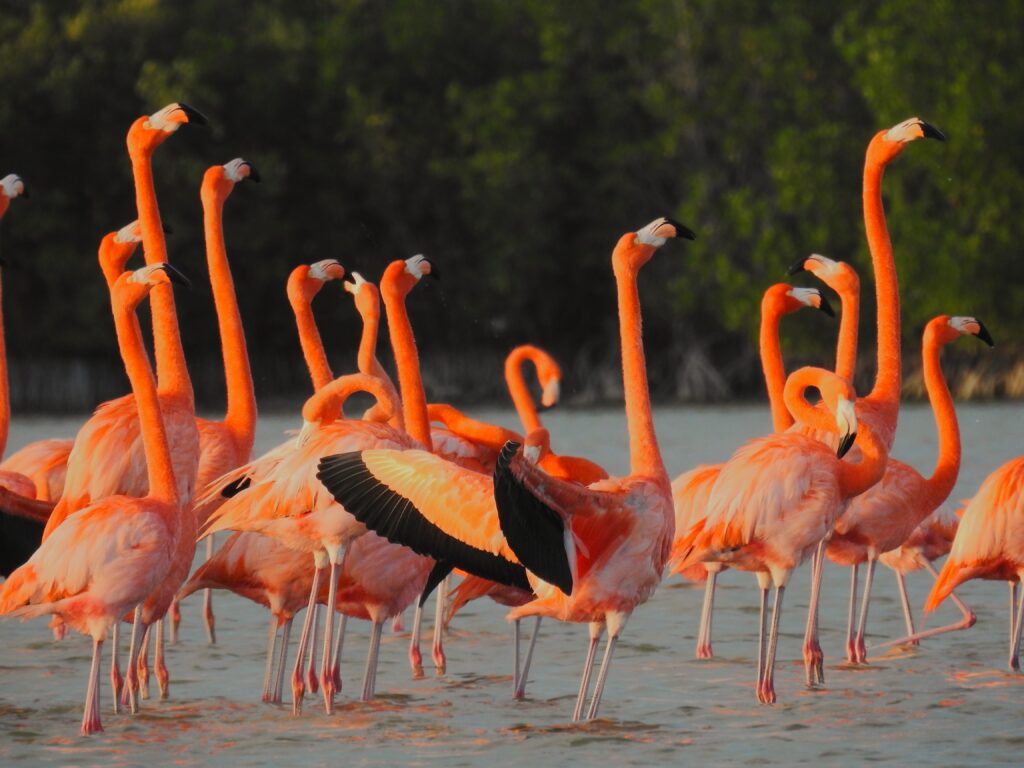
A secondary reason for their distinguished colouration could be signaling more intense colourations can serve to indicate abundance of food and sites with good energetic conditions. In this regard, it is said that, in Yucatan, flamingos are more colourful than anywhere else, this is due to the high concentration of carotenoids in the saline waters of the peninsula. In addition to this, factors such as the breeding season that enhances grooming and the low altitude of the area also influence (since carotenoids can oxidize faster in the face of sun exposure, which is more intense at higher altitudes).
Some authors (Arengo & Baldassarre, 2002) have even named the flamingos of Celestún, a coastal town in Yucatán, as “the most observable flock of flamingos in the world.”
Strength in Unity
Flamingos have developed a complex, structured, and non-random social system that allows them to survive.
Although many species of animals seek to camouflage themselves or go unnoticed, flamingos seem to have chosen to bond and attract attention. In reality, their highly gregarious behaviours have three important foundations: the first is the facilitation of food; if a flamingo knows where there is food, everyone knows it. Secondly, protection against predators increases because of their large numbers, it is easier to monitor the environment and protect themselves. In fact, flamingo chicks tend to form small, tightly packed groups when they’re nervous to protect themselves, a very tender scene to watch.
Perhaps the most sophisticated benefit of group living is the transfer of information. When an individual detects a good feeding site or danger, this information spreads throughout the flock. This transfer of information is also reflected in parenting; for example, I have observed how a single adult flamingo can teach a group of chicks to fly, which, together, imitate their wing movements.
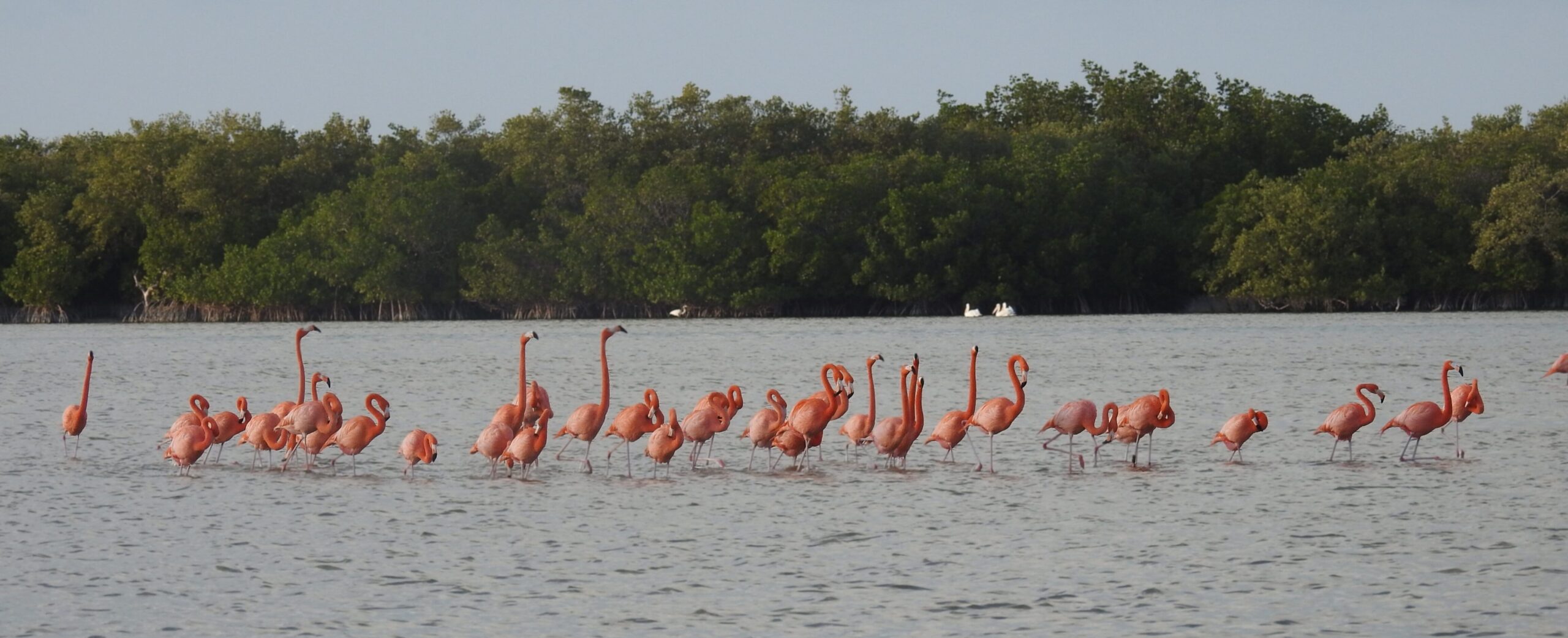
Yet living together also comes with competition. Flamingos are territorial with respect to their nests and can be involved in violent fights, with pushing, pecking, and sometimes bleeding. Still, even conflicts are mediated by social structure: individuals selectively discriminate with whom they fight, who they support, and who they avoid, revealing a society with clear rules.
Conservation Issues: The Cost of Being a Flamingo
At the beginning of this text, I mentioned that perhaps it would be fun to be a flamingo, however, and ironically, flamingos do not have a rosy life. These birds are forced to face various challenges to survive: they must travel long distances, endure winds, hurricanes, storms, sudden changes in temperature and predators such as raccoons or herons that attack their eggs and chicks.
As if that were not enough, the flamingos also face anthropogenic threats: global warming, habitat loss, and even predation by feral animals, such as abandoned dogs in nesting areas. These problems have been documented on several occasions; however, I think one is particularly worth highlighting: the human disturbance caused by tourism, since even nature lovers can unknowingly engage in harmful practices that affect flamingo populations.
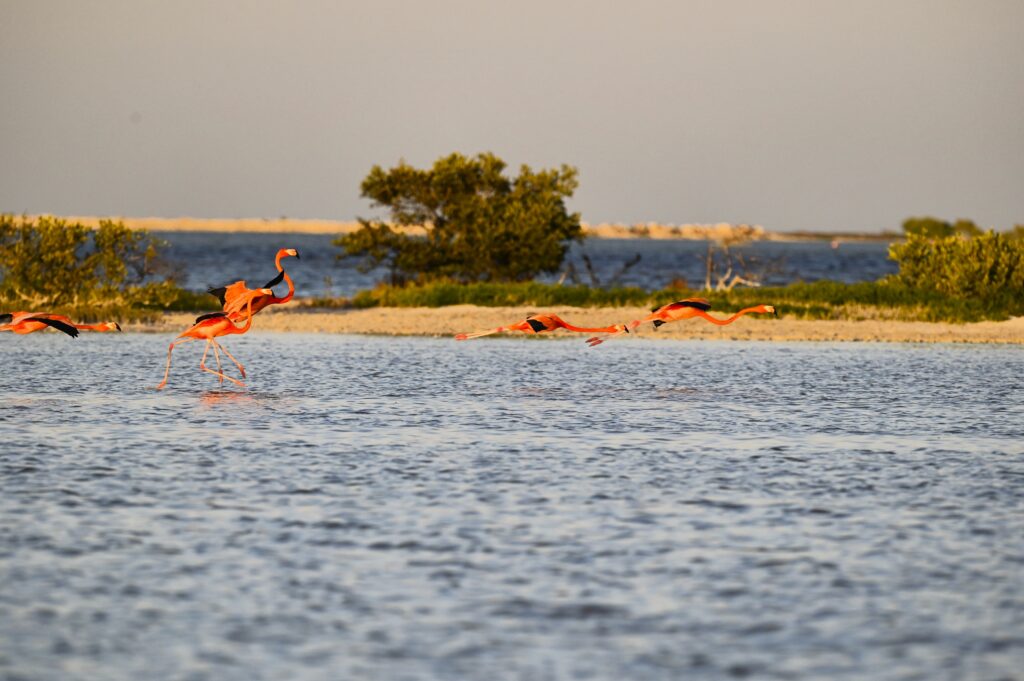
During the 20 years that I have been birdwatching, I have observed numerous problems that these animals face. However, recently I have observed an increase in people who, with the intention of taking a good photo or ‘unique’ video, get closer than recommended distances. There are even cases of people who purposely scare away flamingos to capture amazing videos of them, without knowing that in this sudden flight they could throw some of their eggs, destroy their nests, or even bump into each other and hurt their fragile wings and legs.
Although there have certainly been great advances in flamingo protection, and these incidents, along with the public awareness and outrage they generate, have only led to stronger protection measures for nesting sites, it is important that, as nature lovers, we always act with empathy wherever we go. Let us remember that the peace of these birds is worth more than a viral photo or video.
Final Thoughts: What Flamingos Tell Us About the World and Ourselves
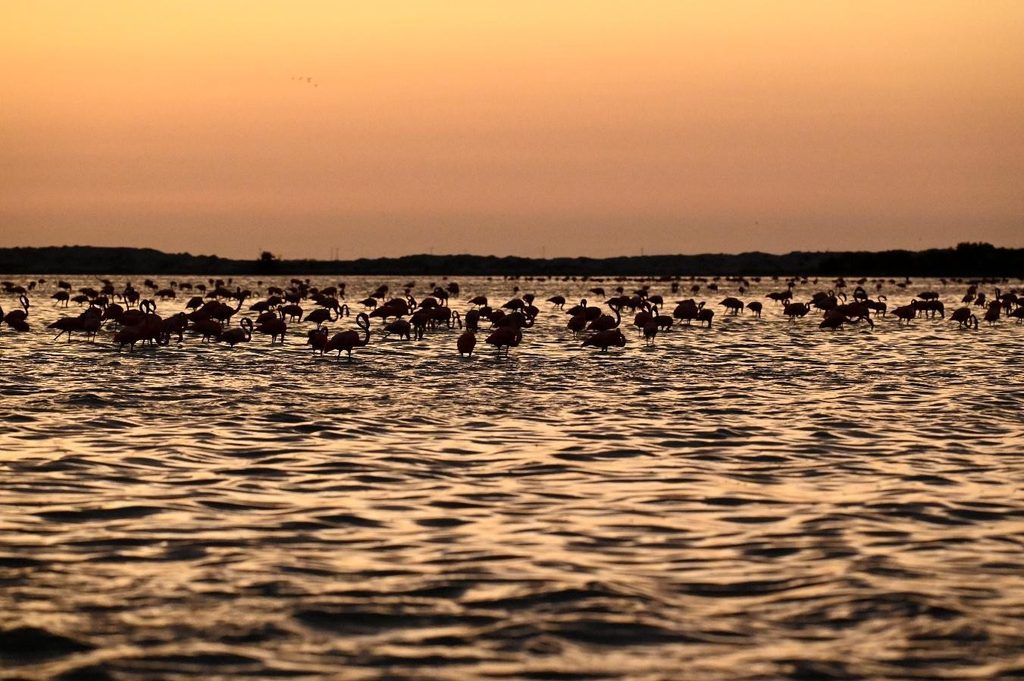
Flamingos are beings with a strong presence. They take advantage of their striking colors to reproduce and to indicate a good diet. Their presence and increase in populations is a good indication of conservation advances and balanced systems.
However, their vulnerability to human impact forces us to question our way of inhabiting the world. In the end, looking at the sky and wishing to be a bird should not be an escape from our reality, but a commitment to protecting theirs, understanding that our greatest reward is not a close-up photo, but knowing that those “pink angels” will continue to return, free and calm, for many more years.
Literature consulted:
Anderson, M. J. (2017). Flamingos: behavior, biology, and relationship with humans. Nova Publishers.
Arengo, F & G Baldassarre (2002) Path choice and foraging behavior of non-breeding American Flamingos in Yucatan, Mexico. The Condor 104: 452–457.
Olson, S. L., & Feduccia, A. (1980). Relationships and evolution of flamingos (Aves: Phoenicopteridae) (No. 316). Washington DC: Smithsonian Institution Press.
Villas Salas, J. R. (1995). El flamenco rosado de la península de Yucatán. Revista Mexicana de Ciencias Forestales, 20(77), 219-223.